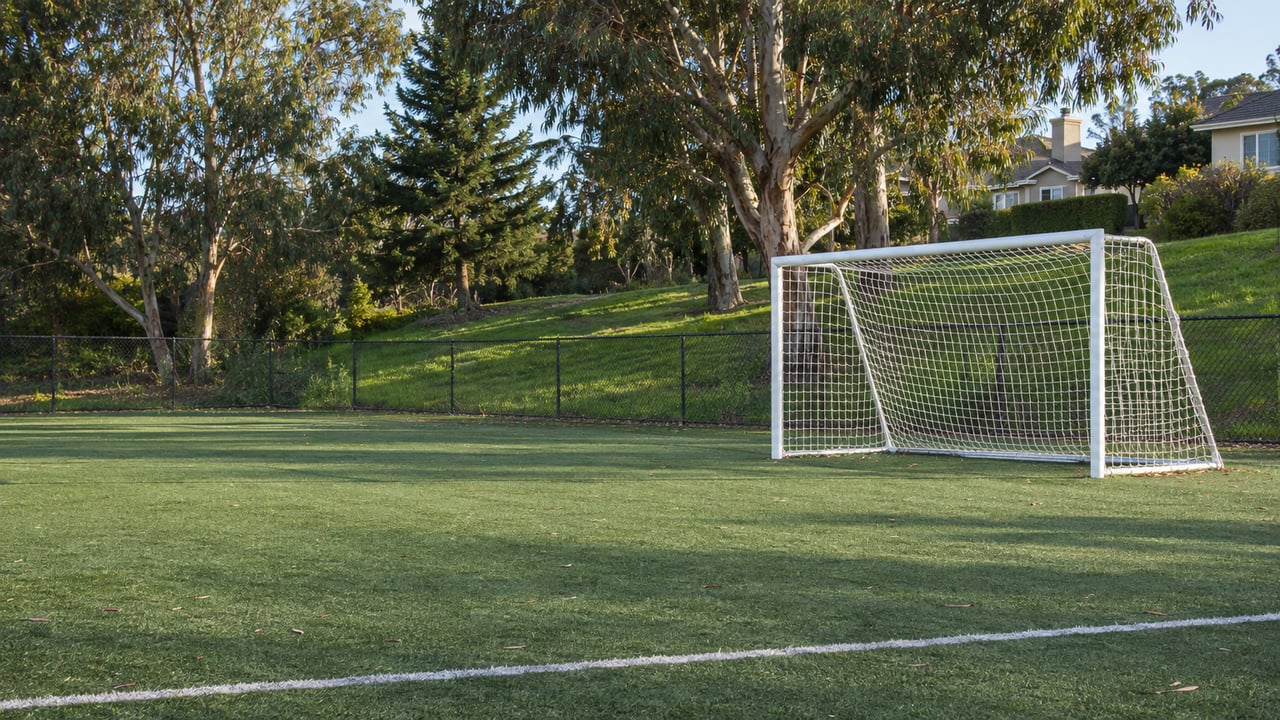
A San Bruno youth soccer player pays the City $11 a season to use a field, or $18 for a player who lives outside the city. Staff calculated what that fee would need to be if it alone paid for the planned turf fields at Crestmoor. The answer was about $410 per player.
The gap between $11 and $410 explains why staff asked the City Council on Oct. 13 to put the Crestmoor Fields project on hold indefinitely. It also explains why the Council said no and asked for other options. The fields at 300 Piedmont Avenue, on the old Crestmoor High School site where Toll Brothers is building 155 homes, are still alive. Paying for the construction is no longer the main question. The harder one is who pays to keep the fields running every year once they're built.
The plan that was supposed to open in spring 2027
The fields have been in the works for years. The Council gave final direction on a 6.9-acre master plan on October 24, 2023, with 5.3 acres set aside for fields. It approved the project's environmental review and entitlements on May 28, 2024, including permanently lit multi-use fields. The San Mateo Daily Journal described the plan as eight overlapping artificial-turf youth fields. It reported that construction was expected to start in February 2026, with a public opening in spring 2027.
Those dates have passed or slipped. As of the October staff report, field design was about 30% complete and still six to eight months from being finished. In July, staff told the Council that construction would probably rise from the authorized $8,552,400 to more than $10 million. In Q&A material for the Oct. 13 meeting, staff said there is "little room to cut costs" because the fields are already designed as a basic facility.
A larger construction bill is a one-time cost. The October report goes further, because the City's own numbers show the yearly operating cost is what puts the project at risk.
Where the yearly money goes
The Oct. 13 staff report estimates the Year 1 cost to operate the fields at $396,551. That total has two parts. About $162,500 is ordinary operations and maintenance. The other $234,000 goes into a reserve for replacing the synthetic turf.
The turf reserve is the bigger of the two. Callander Associates updated the estimate for replacing the turf after about 10 years to roughly $2,340,510, up from $1.8 million. Saving that amount over a decade works out to $234,000 a year. The report projects total yearly costs rising about 3% a year, to roughly $517,000 by Year 10.
Staff also asked San Bruno's youth sports groups for real participation numbers. Turnout was higher than expected. The new count is 968 participants, about 49% more than the 650 the City had assumed, with 568 in recreational programs alone. The number of playable hours fell, to 2,200 a year from a planning assumption of 2,500. The report says the extra players improve the revenue picture but "do not change the conclusion."
Here is how the fee scenarios staff modeled hold up against that $396,551 Year 1 bill.
| Fee model | Year 1 revenue | Share of costs covered | Year 1 City subsidy |
|---|---|---|---|
| Current fees, $11 resident / $18 nonresident per player | ~$27,000 | ~7% | ~$370,000 |
| Market rates, hourly only | ~$113,000 | ~28% | ~$284,000 |
| Market rates, per-player plus hourly | ~$153,000 | ~39% | ~$243,000 |
| $80 per hour, no per-player fee | ~$176,000 | ~44% | ~$221,000 |
| $80 per hour plus a $2 million endowment | ~$256,000 | ~65% | ~$141,000 |
The best case on that list depends on two things that don't exist yet. User groups have said they could pay $80 an hour, but that rate hasn't been confirmed. The endowment is hypothetical, and the report counts it as drawing about $80,000 a year. Even in that case, the City covers about $141,000 in Year 1. Staff expects costs to grow faster than fee revenue, so the gap would widen each year. Across the realistic scenarios, the City's total subsidy comes to roughly $1.8 million to $3.3 million over 10 years.
Why the developer isn't covering the gap
In its written answers for the Oct. 13 meeting, staff said Toll Brothers has no financial obligation toward building, maintaining or operating Crestmoor Fields.
Here is how the money actually works, according to City documents:
- Land: Toll Brothers is dedicating the parkland to the City as part of the 155-home subdivision.
- Fee credits: The City could pay the developer to build the fields with about $3.2 million in development impact fee credits. Those credits can also be spent on other City facility projects.
- Foundation grant: On December 9, 2025, the Council approved a field improvement agreement, subject to execution, capped at $6.6 million. It would be funded by about $3.2 million in fee credits plus $3.4 million from the San Bruno Community Foundation.
- Stormwater basin: On August 25, 2026, the Council approved a reimbursement agreement with Toll Brothers of up to $305,000 so a stormwater basin could be built before the wet season.
All of those pieces pay for land and construction. None of them covers the $396,551 yearly operating bill. The Crestmoor fields would also compete for City money with roughly $60 million in deferred maintenance across San Bruno's existing parks and facilities. About $19 million of that carries what the report calls "certain liabilities."
Building while Toll Brothers is still on site was once seen as a way to save money. The October report says that advantage "may be already lost." Design is far enough behind that crews will probably have to come back and set up again either way.
What the Council said instead
The Council turned down the indefinite hold anyway. Its reasons focus on the families who use the site. The San Mateo Daily Journal reported that councilmembers asked staff for alternatives because the site matters so much to North County youth soccer leagues. Councilmember Marty Medina told the paper, "The idea of indefinite hold was fully rejected by the council." He suggested looking at grants and more money from the San Bruno Community Foundation.
Councilmember Tom Hamilton spoke directly to the subsidy numbers, according to the same Daily Journal report:
"Nobody achieves full cost recovery."
He added that there is always going to be some subsidy.
Vice Mayor Michael Salazar asked staff to also look at other places youth soccer could call home. He told the Daily Journal, "Youth sports are a huge part of our community."
So most of the Council accepts that the City will pay something every year. The open question is how much, and which option keeps that amount manageable.
The options on the table
The October report lays out three paths. Each one deals with the yearly operating cost in a different way.
- Finish the design, then decide. The draft field improvement agreement has a built-in pause point. Toll Brothers would complete the design and get bid prices, and the Council could stop before agreeing to any construction. This step would use about $560,000 in fee credits. Staff argued that better construction prices would not fix the operating gap.
- Bring in a private partner. A private operator could pay for construction and take on maintenance and turf replacement. The trade-off is that the City would give up significant control over design, scheduling and fees, and would have to negotiate guaranteed access for youth sports. Staff noted a partner has the most influence while design is around 30%, and that "current interest may not last." Hamilton also said he wants to explore this option.
- Build something simpler. The City could work with Toll Brothers on a basic park or open space instead. Staff put a basic park at about $125,000 a year in maintenance, roughly $4 million in total City cost over 10 years. Undeveloped open space would cost about $20,000 a year, or $200,000 over 10 years.
Put those next to the full plan's 10-year ownership estimate of $12.52 million to $13.97 million or more. That figure includes construction, about $1.625 million in operations and maintenance, and the $2.34 million turf replacement. The turf reserve alone costs more each year than maintaining a basic park would.
Where San Bruno kids are playing now
The old Crestmoor grass fields were used by local AYSO and Lowen soccer clubs, according to the City's July 2026 report. San Bruno AYSO Region 249's field directory now lists Rollingwood Elementary, Monte Verde Soccer Field, BellAir School Field and Parkside, plus fields in Millbrae and Lipman in Brisbane. Crestmoor isn't on the list. The directory also shows John Muir Elementary's field as closed for construction.
Staff said it would return "at a later date" to discuss future uses of the Crestmoor land. The Council's November 10 regular meeting was canceled. Updates will appear in the City's Agenda Center. For more on how San Bruno handles its public spaces, see our story on the Posy Park fountain and our San Bruno neighborhood guide.
If you live near Piedmont Avenue and want to know how the new Crestmoor homes and whatever replaces the old fields might affect your own home's value, Bryan Cruz and Rey Ancheta are happy to walk through it with you, in English, Tagalog or Ilocano. A good place to start is to get your instant home valuation.
