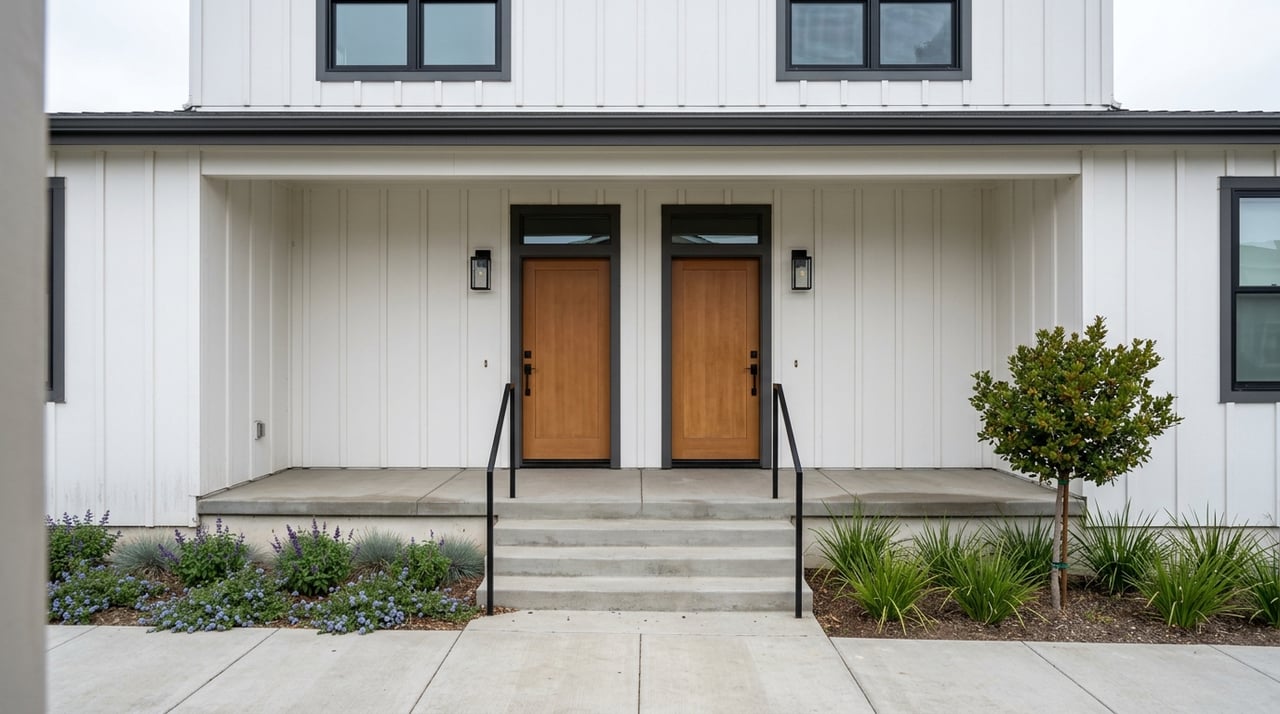
If you have looked at South San Francisco multifamily properties and thought, "Is this really worth it at these prices?" you are asking the right question. This is not a market where small multifamily usually works because it is cheap. It tends to work because housing is limited, rental demand is strong, and the right property can offer flexible long-term value. In this guide, you will learn what counts as small multifamily here, what rules matter most, and how to evaluate a property with more confidence. Let’s dive in.
Why South San Francisco draws investors
South San Francisco is a high-cost Peninsula market, but it continues to show strong housing demand. City housing materials say the city must plan for 3,956 new units during the 2023 to 2031 RHNA cycle, while local planning data also point to rising rents and meaningful renter cost burden.
That context matters if you are thinking about a duplex, triplex, or fourplex. In this market, small multifamily is often less about finding a bargain and more about owning a useful, income-producing property in an area with limited supply. Redfin data cited by the city showed a median sale price around $1.3 million in spring 2026, and city materials estimate multifamily construction costs in San Mateo County at about $732,500 per unit.
What counts as small multifamily
In South San Francisco, multiple-unit residential generally means two or more dwelling units on one lot. That broad category can include duplexes, triplexes, fourplexes, cottage courts, micro-units, and apartment buildings.
For many buyers, the most practical small multifamily targets are duplexes through fourplexes. These properties may offer rental income, owner-occupant flexibility, or future improvement potential without the added complexity that often comes with larger projects.
Duplex and multifamily zoning basics
South San Francisco zoning rules are specific, so you should not assume a property’s current layout tells the whole story. Duplexes are permitted in RM-22, while multifamily is permitted in RM-22 as well as RH-37.5, RH-50, and RH-180 districts.
That means your first step should be to verify the parcel’s actual zoning and legal use before you underwrite future plans. If you are thinking about house-hacking, adding units, or repositioning the property, the zoning map and legal unit count matter just as much as the asking price.
Why 2 to 4 units can be simpler
One important local threshold is five units. South San Francisco requires inclusionary housing plans for residential developments of five or more units, and rental projects at that level must provide 15% inclusionary units after the initial one-year period.
For many buyers, that makes 2 to 4 unit properties especially attractive. They generally avoid that inclusionary threshold, which can reduce complexity and make the path from purchase to operation more straightforward.
ADUs can improve the math
Accessory dwelling units can be an important value-add tool in South San Francisco. The city says ADU permits are ministerial and should be issued within 60 days of a complete application.
The code allows ADUs on lots where single-unit or multiple-unit dwellings are permitted or conditionally permitted. On multiple-unit lots, the city allows up to two detached ADUs and converted ADUs up to 25% of the existing number of units, or one unit, whichever is greater.
For you as a buyer, that means some properties may have room to create additional income-producing space without going through a full rezoning process. Still, the opportunity depends on the lot, the existing improvements, and local code details, so this should always be verified before you count on it.
Parking can make or break a deal
In South San Francisco, parking often affects value more than buyers expect. The city’s code generally requires one covered space per multifamily unit, and an unencumbered 8-by-18-foot driveway space may count as off-street parking.
There is also an important exception. In Transit Station Areas, no off-street parking is required under AB 2097 and city code.
That can materially change a property’s upside. A garage layout, usable driveway, or location near transit may shape whether an ADU plan works, whether the existing setup is compliant, and how future buyers or tenants view the property.
Understand rent and tenant rules early
Before you buy, make sure your income assumptions match the actual legal framework. California’s Tenant Protection Act generally caps annual rent increases on covered units at 5% plus CPI, or 10%, whichever is lower, and requires just cause after the qualifying occupancy period.
The law does not apply the same way to every property. State housing guidance says some housing may be exempt, including units less than 15 years old and certain owner-occupied one- to two-unit situations.
For small multifamily buyers, this means you need to review the building’s age, occupancy history, and ownership setup before assuming you can raise rents on a certain timeline. A strong-looking rent gap on paper does not always turn into immediate cash flow.
Deposit and habitability rules matter too
California law also limits security deposits to two months’ rent for unfurnished units and three months’ rent for furnished units. State guidance also emphasizes habitability, anti-discrimination requirements, and source-of-income protections.
In practical terms, older properties deserve careful review. Deferred maintenance, code issues, or habitability concerns can quickly change your renovation budget and your operating timeline.
Budget for local operating costs
A small multifamily property is not just a purchase price and a rent roll. In South San Francisco, recurring local costs can affect your returns in a very real way.
The city now treats residential rental as a business-license category. The updated business license tax removed the old five-unit threshold, and the ordinance lists a $50 per unit residential rental tax, subject to annual cost-index adjustments beginning January 1, 2026.
You should also account for required garbage service through South San Francisco Scavengers and sewer charges that the city says are collected through the county property tax roll for most customers. These are operating expenses that belong in your underwriting from day one.
Local relocation rules deserve attention
If your strategy involves major rehab, tenant displacement, or repositioning an occupied property, do not stop at statewide rules. South San Francisco adopted a residential tenant relocation chapter in 2026.
That means your timeline and costs may look different if a project affects current occupants. Before moving forward, you should review local relocation requirements along with any state rules that apply to the property.
A practical due diligence checklist
If you are comparing small multifamily opportunities in South San Francisco, use a process that keeps the basics in focus. A property can look promising on a listing sheet and still fall apart once zoning, parking, or operating constraints show up.
Here is a practical checklist to use before you commit:
- Verify the parcel’s zoning and legal unit count using the city’s zoning tools.
- Confirm whether the property is covered by AB 1482 and whether any exemption may apply.
- Review parking layout, garage use, driveway dimensions, and whether the site benefits from transit-area parking relief.
- Budget for recurring costs such as the local rental business-license tax, garbage service, sewer charges, and routine compliance work.
- If the property has five or more units, confirm inclusionary housing requirements early.
- For older buildings, look closely at habitability, deferred maintenance, and repair needs before projecting future rent growth.
How to think about house-hacking
Many buyers ask whether a duplex can work as a house-hack in South San Francisco. The answer is potentially yes, but only if the parcel is zoned for the use and the legal, parking, and tenancy details support your plan.
This is one reason small multifamily can be appealing in high-cost Peninsula markets. If you can live in one unit while collecting income from the others, the property may serve both housing and long-term investment goals. The key is to test the real numbers and rules, not just the idea.
What usually drives value most
In South San Francisco, the best small multifamily opportunities are often defined by constraints as much as potential. Zoning, legal unit count, parking setup, local operating costs, and tenant rules all shape what the property can actually do.
That is why experienced buyers look beyond headline rent and price-per-unit. In a market like this, the winning property is often the one with clear legal status, manageable expenses, and realistic upside you can actually execute.
If you are exploring a duplex, triplex, or fourplex in South San Francisco, having local guidance can save you time and help you avoid expensive assumptions. To talk through the numbers, neighborhoods, and next steps, connect with Bryan Cruz and Rey Ancheta.
FAQs
What counts as small multifamily in South San Francisco?
- In South San Francisco, small multifamily generally includes properties with two or more dwelling units on one lot, such as duplexes, triplexes, and fourplexes.
Can you add an ADU to a South San Francisco multifamily property?
- Often yes, because the city allows ADUs on many lots with single-unit or multiple-unit dwellings, but the actual property, lot layout, and code details need to be verified first.
Does South San Francisco require parking for multifamily properties?
- In many cases yes, because the city generally requires one covered space per multifamily unit, although some Transit Station Area properties may have no off-street parking requirement.
Does AB 1482 apply to small multifamily in South San Francisco?
- It often does, but not always, because state guidance says some units may be exempt based on factors like property age or certain owner-occupied one- to two-unit situations.
Are 2 to 4 unit properties simpler than larger multifamily in South San Francisco?
- They often are, because local inclusionary housing requirements generally apply to residential developments of five or more units.
What operating costs should you budget for on a South San Francisco rental property?
- Buyers should account for costs such as the city’s residential rental business-license tax, required garbage service, sewer charges, maintenance, and routine code-compliance expenses.
